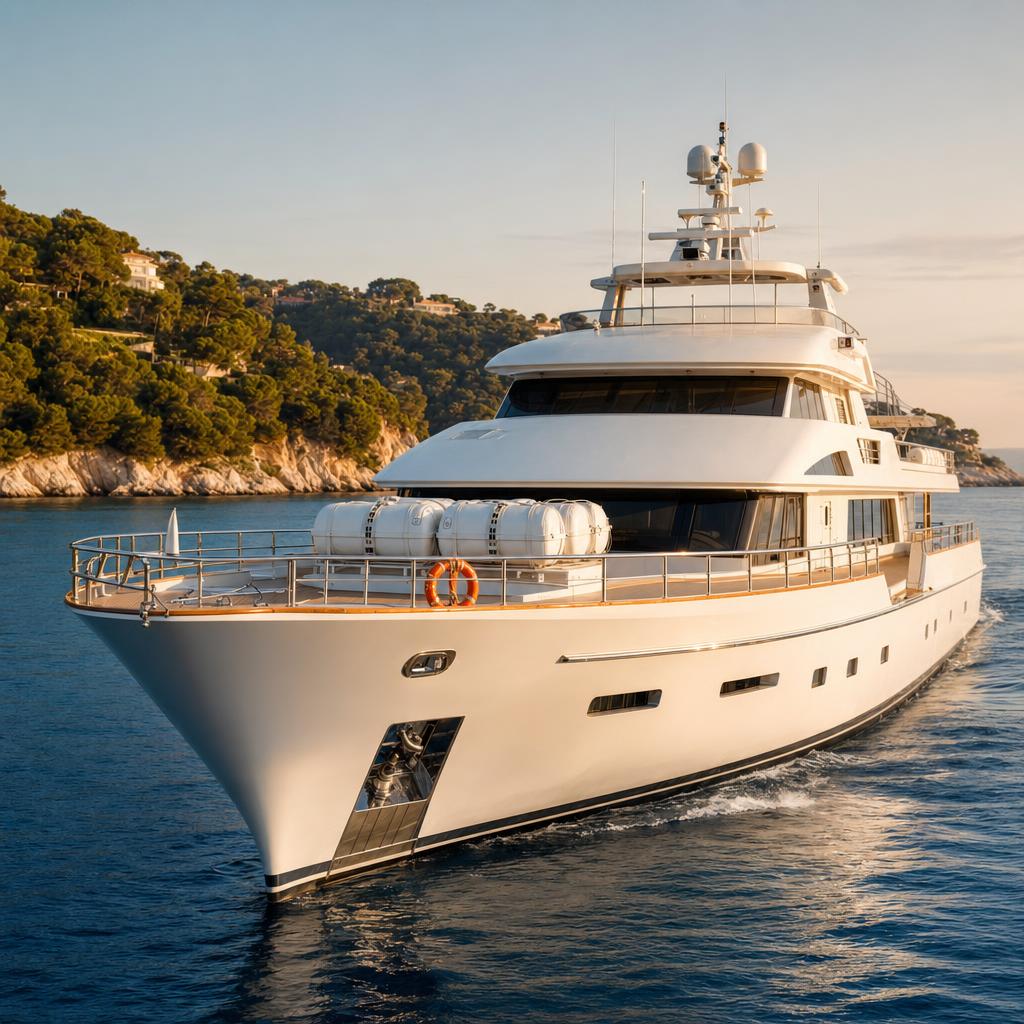
How safety on a superyacht works in practice
On a superyacht, safety is an ongoing part of operations. The captain has ultimate responsibility, and the crew support operations on the water, on deck and in the living quarters. This begins even before the yacht sets sail: the route, weather conditions, mooring locations and daily schedule are constantly assessed with safety and comfort in mind.
For guests, this is usually evident in small but important moments. Think of briefings on departure, assistance when boarding, instructions during tender transfers and clear guidelines on movement on deck. It is precisely this combination of preparation, supervision and discipline that makes a superyacht charter safe and relaxing.
The role of the captain and the professional crew
The captain is the highest authority on board. This is not a mere formality, but an essential part of safe sailing. For example, the captain decides on route changes, speed, anchorage locations and departure or arrival times when weather conditions or local circumstances warrant it.
The crew supports this responsibility in practice. Depending on the yacht and the crew, this includes, amongst other things:
- supervision on deck during manoeuvres and when moving
- assisting guests with boarding, disembarking and the use of tenders
- operational coordination between navigation, service and daily planning
- clear communication when instructions must be followed immediately
A crewed charter therefore also means that you must follow the instructions of the captain and crew, even if a change seems unexpected at the time. That decision is made with safety as the primary consideration. Would you like to put the added value of sailing with a crew into perspective, including the costs? Then read ‘Sailing with a crew: costs and safety benefits’.
The safety briefing on board
At the start of a charter, you will usually receive a safety briefing. This briefing is an important moment, as it allows you to familiarise yourself with the yacht, the basic rules on board and the practical considerations for your stay.
The exact details may vary from yacht to yacht, but usually cover topics such as moving safely on board, what you should and should not do yourself, and who to speak to if you have any questions or uncertainties. It also explains why certain areas, actions or situations require extra attention.
Particularly on a superyacht, where service, privacy and technology come together, a thorough briefing prevents misunderstandings. You know straight away what to expect, and the crew know that everyone on board has received the same basic instructions. Finding out more about what is included in a superyacht charter (crew and safety equipment) also helps to clarify expectations regarding service and support on board.
Why rules are strictly followed on board
Many rules on a superyacht seem self-evident, but often have a clear safety rationale. This applies, for example, to when you move about on deck, what footwear is appropriate, and why certain work areas are not freely accessible to guests.
These rules are not there to make the experience more formal, but to minimise risks and ensure the operation runs smoothly. On a moving yacht, wet surfaces, stairs, lines, equipment and manoeuvres may require extra care. What seems harmless on the quay can have a different effect at sea.
That is why it is wise to always consult the crew if in doubt. This is certainly true during mooring, anchoring, transfers or changing weather conditions. Within professional charter practices, this is also in line with MYBA safety and quality standards, in which clear agreements and procedures play a key role.
What you, as a guest, can do to ensure a safe stay
A professional crew takes a lot off your hands, but safety on a superyacht also benefits from good guest behaviour. By keeping a few simple points in mind, you can directly contribute to a safe and pleasant atmosphere on board.
- Listen carefully to the briefing and ask questions if anything is unclear.
- Follow the captain’s and crew’s instructions immediately, particularly on departure, arrival and during transfers.
- Move carefully around the deck and take extra care on wet surfaces or stairs.
- Please inform the crew of any special requests or changes if these affect the schedule or movements on board.
- Always keep children under supervision, particularly on and around the water.
- Please respect the crew’s work areas so that they can operate safely and efficiently.
These points are simple, but they make a big difference. The better the cooperation between guests and crew, the more carefree the charter experience will be.
Safety and comfort go hand in hand on a superyacht
In a high-quality charter experience, safety and comfort are not mutually exclusive. On the contrary: a well-organised crew, clear procedures and professional leadership ensure that you can feel free and relaxed on board. It is precisely because there is a systematic focus on safety that the peace of mind you would expect from a superyacht is created.
At Global Yacht Charter, crewed superyachts are at the heart of what we do, with the captain and crew forming an essential part of the experience. If you’d like to discuss your preferences with a specialist, we’ll work with you to find a charter that suits your travel style, group and destination. You can also familiarise yourself with our yachts in advance (specifications and crew).
Frequently asked questions
How safe are superyachts?
Superyachts are designed and operated with safety as an integral part of day-to-day operations. During a charter, the professional crew are the key factor: the captain and crew oversee navigation, safety and order on board. For guests, this translates into guidance, clear instructions and a structured way of working.
How do yachts defend themselves against pirates?
This depends on the cruising area, route and operational choices, but this topic falls outside the scope of the standard charter experience which is the focus of this page. What is particularly relevant for guests is that the captain is responsible for choosing safe routes and making decisions whilst underway.
Do I need sailing experience to charter a superyacht?
No, on a crewed superyacht, you do not need to have any sailing experience yourself. The captain and crew take care of navigation, safety and day-to-day operations. You are mainly expected to attend the briefing and follow the instructions on board.
Why might the route change during a charter?
An itinerary may be adjusted due to weather conditions, sea conditions, local restrictions or the captain’s safety considerations. This is standard practice on a superyacht and is done to ensure your stay on board remains safe and comfortable.